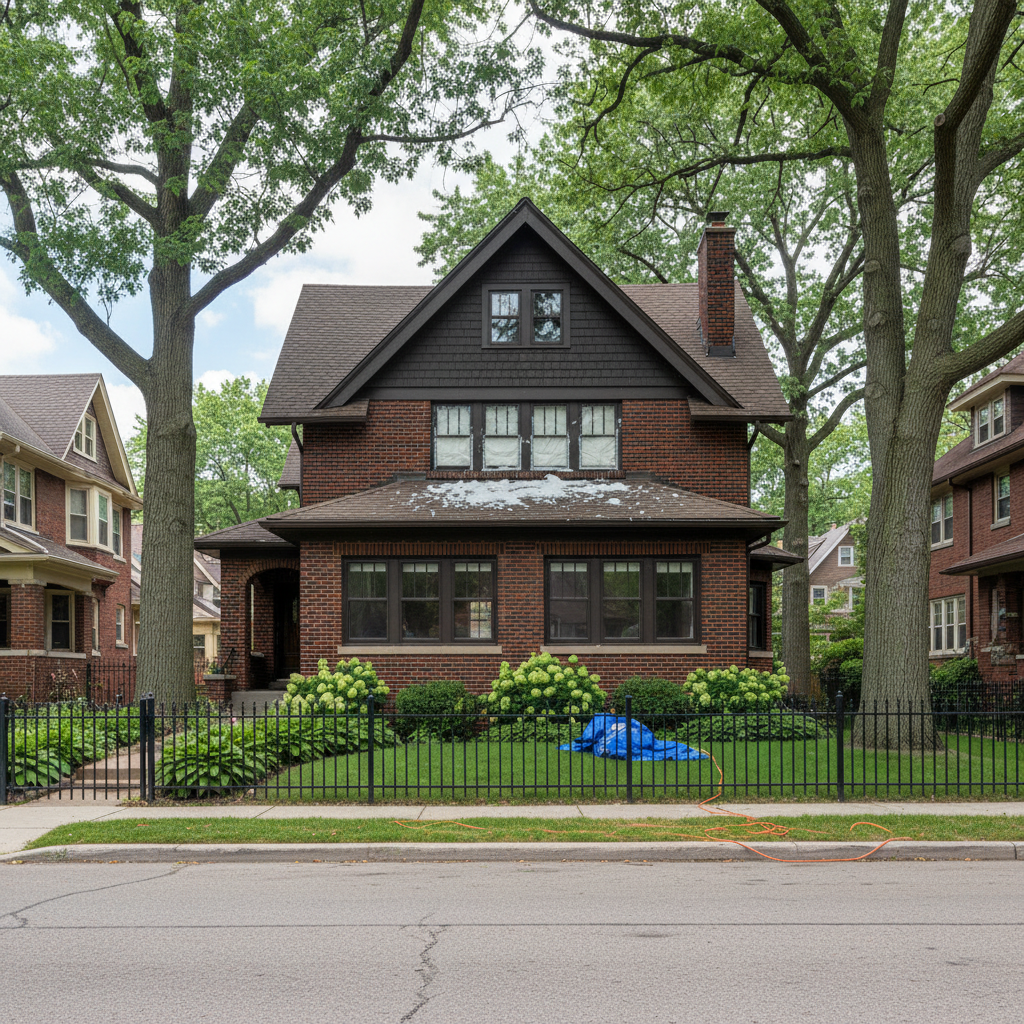
You probably don't think much about your attic insulation, do you? Not until that heating bill lands in your mailbox, anyway, or you're absolutely sweating upstairs in July. Here in Oak Park, with all our beautiful, historic homes, I see the same problems pop up again and again when it comes to attics.
The Oak Park Attic Story: Old Homes, Old Problems
Take a walk through the Frank Lloyd Wright Historic District, or even just down a street in the Ridgeland-Oak Park Historic District, and you'll spot some incredible architecture. What you won't see, though, is what's hiding up in those attics. A lot of these homes went up when "energy efficiency" wasn't even a phrase, let alone something people prioritized. They often have minimal, outdated insulation – maybe some old rock wool or thin fiberglass batts that have settled and become pretty useless over the decades. Honestly, it's a wonder some of these places stay warm at all.
I've been in attics on homes built in the 1920s and 30s where the insulation is barely two inches thick. That just isn't going to cut it for our Illinois winters, or those increasingly brutal summer heat waves. You're basically heating or cooling the sky at that point. It's not just about feeling comfortable; it's about protecting your home from ice dams in winter and keeping your HVAC system from working overtime. That means higher utility bills and a shorter lifespan for your furnace and AC.
Why Local Conditions Matter for Your Attic
You can read all the national advice you want, but it just doesn't hit home like understanding our specific climate. We get huge temperature swings here. A 90-degree summer day followed by a 10-degree winter night? That's not uncommon. Your attic acts as the buffer between that extreme outdoor temperature and your living space. If that buffer isn't doing its job, you'll definitely feel it.
Also, let's talk about moisture for a second. Our humid summers and snowy winters mean managing moisture is super important. Poorly insulated attics can lead to condensation issues, which then can cause mold or rot in your roof decking and framing. I've seen it happen, and believe me, it's a mess that's expensive to fix. Proper ventilation, combined with the right amount and type of insulation, is key to preventing these kinds of problems.
What I Look For (And What You Should Too)
When I head into an Oak Park attic, I'm not just looking at the insulation itself. I'm checking for a few key things:
- Adequate Depth: Is there enough of it? For our climate zone, we're talking R-49 to R-60, which usually means 16-20 inches of blown-in cellulose or fiberglass. Most older homes are nowhere near that, sadly.
- Even Coverage: Are there gaps? Has it settled in some spots, leaving areas exposed? Recessed lights, old electrical boxes, and plumbing vents often create pathways for air leakage if they aren't sealed and insulated properly.
- Air Sealing: This is huge. Insulation won't do its job if warm air from your living space is just leaking directly into the attic. I look for unsealed top plates, gaps around chimneys, and open chases. Sealing these first is critical before adding more insulation.
- Ventilation: Is there proper airflow from the soffits to the ridge? Without it, heat and moisture get trapped, making your insulation less effective and potentially causing damage.
Why Trust a Local Pro Like Sunrise Insulation Co.?
Look, anyone can blow some insulation into an attic. But knowing the quirks of Oak Park homes – the balloon framing, the plaster walls, the specific types of roofing common around here – that's where local expertise really counts. We understand the building science specific to these older structures. We know what works, and just as importantly, what doesn't.
We're not just selling you a product; we're providing a solution tailored to your home and our local environment. You want someone who's seen it all in a 1910 Craftsman bungalow as well as a 1950s ranch. That's us. We live here, we work here, and we care about keeping our neighbors comfortable and their homes protected. Give us a call if you're wondering about your attic. We'll give you an honest assessment, no runaround.