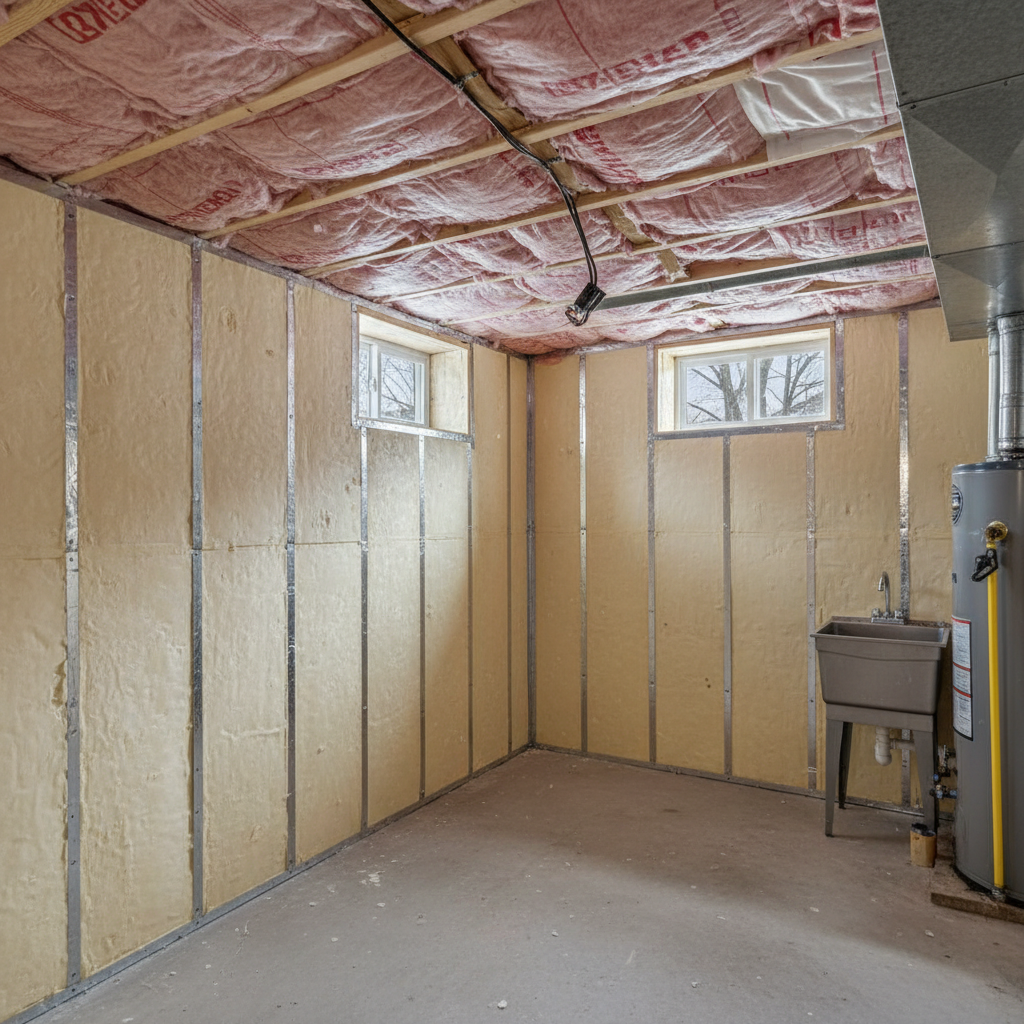
So, you're finally ready to tackle that cold, damp basement, right? Make it more comfortable, maybe even finish it out? Good for you! Insulating your basement is definitely a smart move. But here's the thing: I've seen a lot of folks in Oak Park make some pretty common, and often expensive, blunders when they're planning or hiring for this kind of work. Let's talk about what you really need to watch out for.
Mistake #1: Not Addressing Moisture First
This is probably the biggest one, honestly, and it's a huge red flag if a contractor doesn't even bring it up. Your basement here in Oak Park, especially in older homes with those classic brick foundations, is just prone to moisture. We get some serious spring thaws and heavy summer rains around here, and water, well, it always finds a way. If you insulate right over existing moisture issues – whether it's condensation, seepage, or a full-blown leak – you're just trapping that moisture in. What happens then? Mold, mildew, rot, terrible air quality, and insulation that just quits working. You'll be ripping it all out sooner than you think, trust me. Always, always, always get any water problems fixed, sealed, or managed before you even think about putting up insulation. This might mean exterior drainage, interior perimeter drains, or simply sealing cracks. Don't skip this step, no matter what.
Mistake #2: Choosing the Wrong Type of Insulation for Basements
Not all insulation is created equal, especially when we're talking about basements. I've seen people try to just slap up standard fiberglass batts against a concrete wall. Big mistake. Fiberglass batts are air-permeable, meaning air and moisture can pass right through them. When warm, moist indoor air hits that cold concrete wall, you get condensation. The fiberglass soaks up that moisture, loses its R-value, and becomes a perfect breeding ground for mold. It's a recipe for disaster. For basements, you need something that can handle moisture and create an air seal. Rigid foam boards (like XPS or polyiso) are a good option, often paired with a stud wall. Spray foam, either open-cell or closed-cell, is another excellent choice because it conforms to irregularities and creates a continuous air and vapor barrier. Closed-cell spray foam, in particular, is fantastic; it's a vapor barrier all by itself and doesn't absorb water.
Mistake #3: Ignoring the Rim Joists
People often focus on the main walls and completely forget about the rim joists. These are those boards that sit right on top of your foundation wall, where your floor joists connect to the exterior wall. They're a massive source of air leakage and heat loss in a basement. Think about it: it's a direct connection to the outside world, often with gaps and cracks. If you insulate your walls but leave the rim joists exposed or poorly sealed, you're leaving a huge hole in your thermal envelope. I always tell my customers at Sunrise Insulation Co. that sealing and insulating the rim joists is non-negotiable for a truly comfortable and efficient basement. Spray foam is ideal here because it expands to fill all those nooks and crannies, creating an airtight seal.
Mistake #4: Not Vetting Your Contractor Properly
This applies to any home improvement project, but especially insulation. You're letting someone into your home, often dealing with materials that require specific safety precautions and expertise. Don't just go with the cheapest bid, okay? Ask for references. Check their reviews online. Make sure they're licensed and insured. Ask specific questions about their process for basement insulation: How do they handle moisture? What materials do they recommend and why? Do they offer a warranty? A good contractor will be happy to answer all these questions and explain their approach. If they're vague, pushy, or can't clearly articulate their plan, that's a major red flag. You want someone who understands the unique challenges of Oak Park's older homes and knows how to properly insulate a basement for our climate, not just a general handyman who's