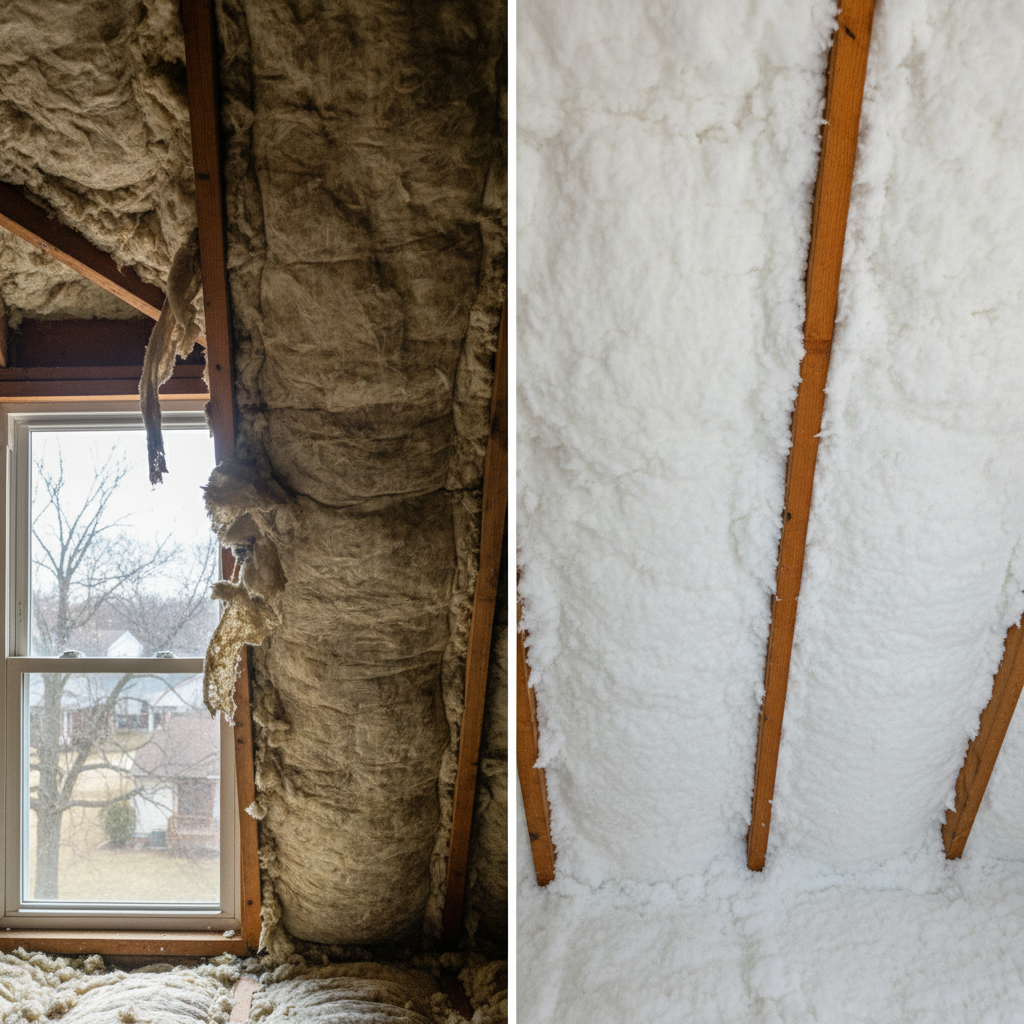
Alright, let's talk attic insulation. It's one of those things you don't think about until your energy bills start climbing or you notice drafts. When folks in Oak Park ask me about insulating their attics, it usually boils down to two main approaches: blown-in insulation or traditional batt insulation. Both have their place, but for most existing homes around here, one usually comes out on top.
Batt Insulation: The Old Standard
You know batt insulation, right? It's those big rolls or pre-cut pieces, usually made of fiberglass, that look like pink or yellow fluffy blankets. You see them a lot in new construction, especially in walls, because they're easy to cut and fit between studs and joists. For an attic, you'd lay them down between the joists.
- Cost: Generally, batt insulation is a bit cheaper upfront per square foot for the material itself. If you're doing a DIY job, you might save a little on labor too, since it's pretty straightforward to unroll and place.
- Durability & Maintenance: Batts are pretty durable. They don't settle much over time, and if they stay dry, they'll last a long time. Maintenance is minimal, just make sure they don't get wet or compressed.
- Appearance: It's insulation, so 'appearance' isn't really a selling point, but it looks neat and tidy when properly installed.
- Performance: Here's where batts can fall short, especially in an existing attic. To work effectively, batts need to be cut perfectly to fit every single gap, wire, pipe, and irregular space. If there are any gaps or compressions, you're losing R-value and letting air leak through. And in older Oak Park homes, with their unique framing and often uneven joist spacing, getting a perfect fit with batts is tough, if not impossible. You'll end up with thermal bridges and cold spots.
Blown-In Insulation: My Go-To for Attics
Now, blown-in insulation is a different beast. It's either loose-fill fiberglass or cellulose, and we use a big machine to blow it into your attic space through a hose. It fills every nook and cranny, creating a seamless thermal blanket.
- Cost: The material cost might be slightly higher than batts, and you'll definitely need professional equipment to install it properly. So, for a DIYer, the initial investment in equipment can be a hurdle. But for a professional job, the labor is often quicker, balancing out the cost.
- Durability & Maintenance: Both fiberglass and cellulose blown-in insulation are very durable. Cellulose is treated for fire resistance and pest deterrence. Fiberglass is naturally non-combustible and won't absorb moisture like cellulose if there's a small leak. They both settle a little over time, but we account for that during installation to ensure you hit your target R-value. Maintenance is pretty much zero once it's in.
- Appearance: It looks like a big, fluffy, even layer of insulation. Not as 'neat' as perfectly laid batts, but it's effective.
- Performance: This is where blown-in truly shines, especially for retrofits. Because it's blown in, it conforms perfectly to all the irregularities in your attic. Think about all those electrical wires, plumbing vents, recessed light fixtures, and uneven joists you find in a typical 1920s bungalow or a multi-unit building in the Frank Lloyd Wright historic district. Blown-in insulation fills every void, eliminating air gaps and thermal bridges. It creates a much more consistent and effective thermal barrier than batts ever could in a complex attic space.
My Recommendation for Oak Park Homes
For most existing homes in Oak Park, I'm going to lean heavily towards blown-in insulation. Here's why:
You've got a lot of older homes here, many with unique architectural features and framing that aren't perfectly uniform. Trying to get batt insulation to fit perfectly in those spaces is a nightmare, and any gaps mean you're losing heat in the winter and letting heat in during our hot, humid Chicago summers. Blown-in insulation, whether it's fiberglass or cellulose, just does a better job of creating that continuous, even blanket of protection.
It's also fantastic for topping up existing, older insulation that might have settled or become inadequate. We can often blow new insulation right over the top, boosting your R-value without a full tear-out.
Look, I've seen countless attics over the years with Sunrise Insulation Co. and the difference in performance between a perfectly installed blown-in system and even a well-installed batt system in an older, irregular attic is significant. You'll feel it in your comfort, and you'll see it in your energy bills.
If you're building new and have a perfectly clean, uniform attic space, batts can be a contender. But for the vast majority of homeowners in our neck of the woods looking to upgrade their attic insulation, blown-in is the smarter, more effective choice for long-term comfort and energy savings.