Ever walk across your living room floor on a freezing January morning in Oak Park and feel like you are standing on very cold flooring? Sunrise Insulation Co. sees this often in local houses. Many homeowners around here blame their furnace, but the real issue is usually hiding right beneath their feet in the crawl space. Older homes near Hemingway or up by North Avenue pull cold air right up through the floorboards. Insulating that space makes a big difference, but you have to approach it the right way.
Before You Touch Anything: Assessing the Mess
Do not just crawl down there with a staple gun and a roll of insulation. You need to know what you are dealing with first. Put on some old clothes, grab a flashlight, and head down. Is the space damp? Do you smell mildew? Heavy spring rains and clay-heavy Chicagoland soil mean moisture gets trapped under houses easily. If you put fiberglass batts over wet earth or against damp rim joists, you are building a mold farm. Fix any drainage issues or plumbing leaks before you even think about insulation materials.
The DIY Phase: What You Can Handle
If your crawl space is relatively dry and easy to move around in, you can knock out some of the prep work yourself to save a few bucks. Here is what makes sense for a weekend DIY project:
- Sealing up obvious gaps around the rim joists with caulk or foam board.
- Laying down a heavy-duty vapor barrier, at least 6-mil poly, across the dirt floor and weighing it down with bricks.
- Wrapping DIY-friendly insulated blankets around accessible heating ducts.
Laying that vapor barrier is dirty, knee-grinding work, but it is straightforward. It stops ground moisture from rising into your home wood framing, which protects your indoor air quality and keeps your framing from rotting out.
When to Hand the Reins to a Pro
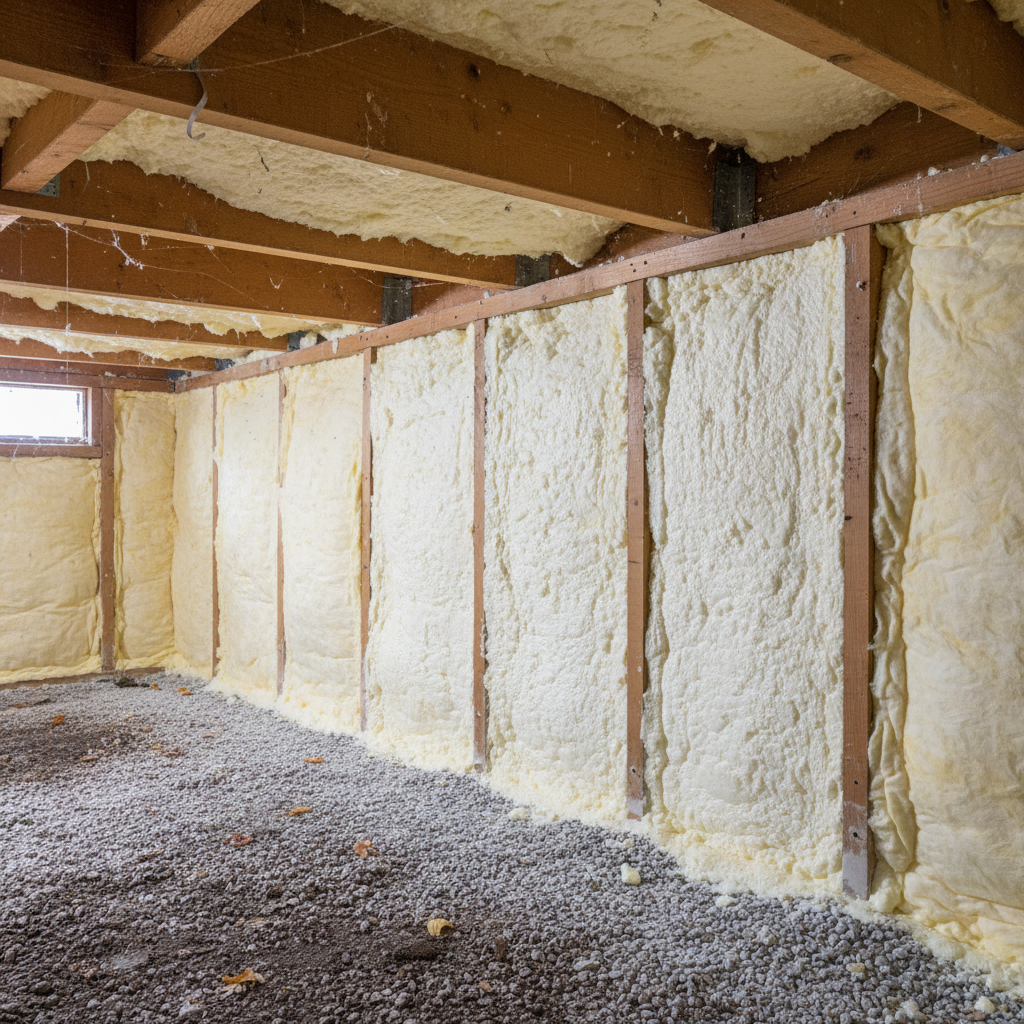
Once you move past basic prep, crawl spaces get tricky. Sunrise Insulation Co. usually gets the call from homeowners who started a weekend project and realized it is turning into a difficult job. If you are looking at encapsulating the entire crawl space, installing rigid foam board tightly against damp foundation walls, or spraying closed-cell polyurethane foam, you want professional gear and experience. Spray foam needs exact temperature and mixing conditions to cure properly, and messing it up means expensive removal. Plus, working in a tight, unventilated crawl space with professional-grade adhesives and chemicals is very demanding on a Saturday afternoon.
After the Installation: Keeping It Dry
Once the insulation and vapor barrier are in place, your work is not quite done. Check on your crawl space a month later. Did the humidity drop? Are your floors upstairs finally losing that morning chill? Keep an eye on your newly conditioned space, especially after heavy storms or rapid snowmelts. For homes and businesses in Oak Park, Sunrise Insulation Co. provides Crawl Space Insulation services.