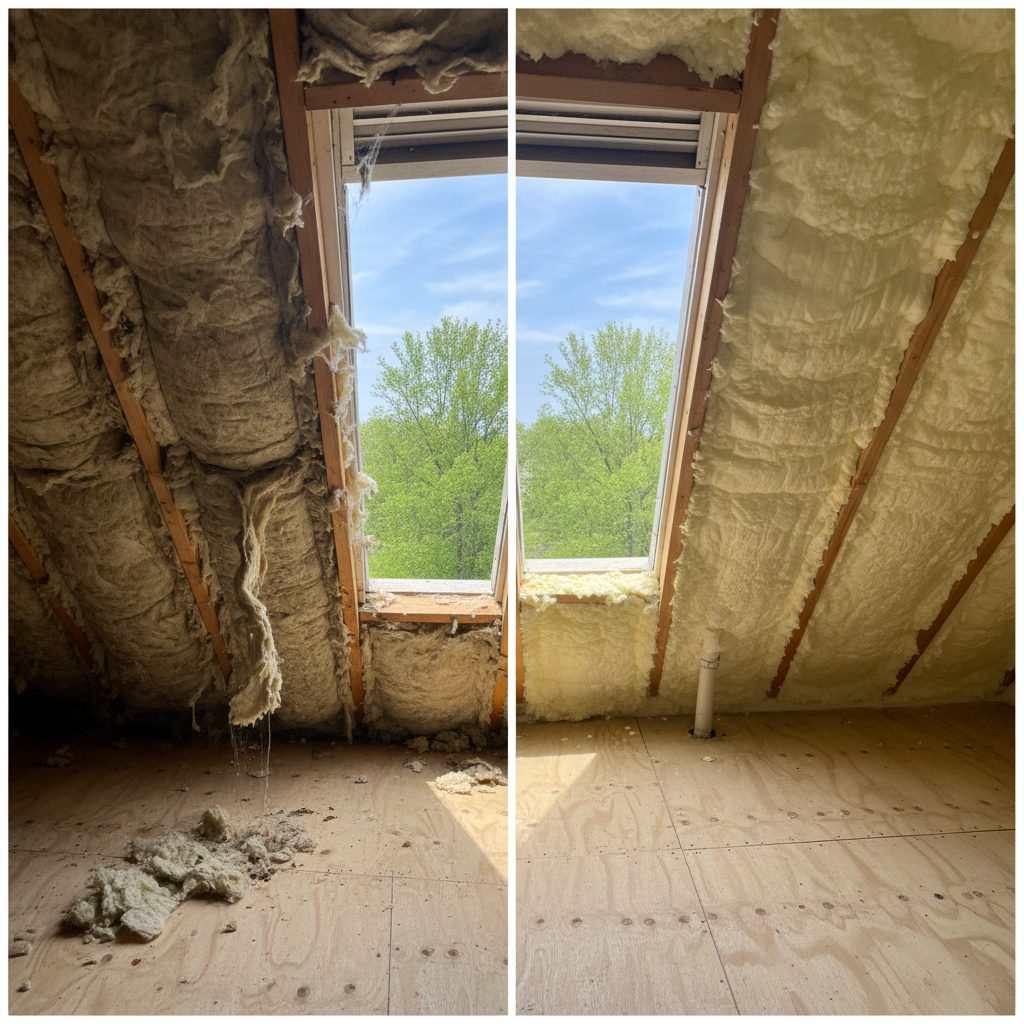
Alright, let's talk open cell spray foam. You've probably heard it's fantastic for sealing up drafts and making your home feel much cozier, especially in our older Oak Park houses. But when you start digging into it, you'll quickly realize there's more than one way to install this stuff. It's not just a simple "spray it and forget it" kind of deal. You actually have to pick between a "flash and batt" approach or going with a "full fill." And trust me, there's a pretty big difference, particularly for homes right here in our neck of the woods.
Flash and Batt: The Hybrid Option
So, what exactly is flash and batt? Well, it's pretty much what the name suggests. We spray a thin layer, usually just an inch or two, of open cell foam directly onto the sheathing or inside the wall cavity. This thin layer acts like a super-effective air seal, stopping those annoying drafts right where they start. Once that's had a chance to cure, we come back and fill the rest of the cavity with traditional batt insulation – think fiberglass or mineral wool.
The Upsides of Flash and Batt
- Cost: This is usually the main reason people lean this way. You're using less spray foam, which is the pricier material, and filling the rest with cheaper batt insulation. It can really cut down on the initial cost compared to a full fill job.
- Familiarity: Some builders and homeowners just feel more at ease with a hybrid system. They like having some traditional insulation in the mix, you know?
- Vapor Permeance: Open cell foam lets vapor pass through, which is handy. When you combine it with batts, it still allows for some drying potential. This can be a good thing in certain situations, though it's less critical than it would be with closed cell foam.
The Not-So-Great Side
- Performance: You just won't get the full R-value potential that a pure spray foam application offers. While the batt insulation adds R-value, it doesn't air seal nearly as well as the foam. So, you're still relying on that thin foam layer for air sealing, and the overall thermal performance won't stack up to a full fill.
- Installation Complexity: It's a two-step process. You've got the foam crew, then the batt crew. That means more coordination, and frankly, more chances for things to get missed or not done perfectly.
- Durability/Maintenance: That batt insulation can settle over time, especially if it gets damp. It's just not as sturdy or long-lasting as a full foam fill. You might not see it, but gaps can form, and that really hurts its effectiveness.
Full Fill Open Cell: The Whole Enchilada
Full fill open cell is when we spray the foam directly into the entire cavity until it's packed solid. We're talking 3.5 inches in a 2x4 wall, 5.5 inches in a 2x6, and so on. It expands and fills every single nook and cranny, creating one big, seamless layer that insulates and air seals all at once.
Why I Recommend Full Fill for Oak Park Homes
- Superior Air Sealing: This is the big kahuna. Our homes here, especially those gorgeous Victorians and bungalows around the Frank Lloyd Wright district, are infamous for being drafty. Full fill foam seals every single gap, crack, and void. You honestly won't believe the difference it makes in comfort and those pesky energy bills. It's like wrapping your whole house in a custom-fitted blanket, no kidding.
- Consistent R-Value: You get the stated R-value across the entire cavity, without thermal bridging or gaps that batts can create. Open cell foam typically gives you about R-3.7 to R-3.8 per inch. A full 2x4 wall (3.5 inches) gets you around R-13, and a 2x6 (5.5 inches) gets you R-20 or more, all with top-tier air sealing.
- Moisture Management: Even though open cell is vapor permeable, its air sealing properties are super important for controlling moisture. By stopping air movement, you prevent moisture-laden air from condensing inside your wall cavities. That's a common headache in our humid Illinois summers and cold winters.
- Durability and Longevity: Once it's in, it's there to stay. It won't settle, sag, or break down over time like batt insulation can. It's a permanent fix.
- Sound Dampening: This is a really nice bonus. Full fill open cell foam does an amazing job of absorbing sound, making your home quieter from both outside noise and between rooms.
- Easier Installation (for us): While it uses more material, it's a single process for the crew. We spray, trim, and then we're done. Less chance for errors when you don't have multiple trades involved.
The Downside of Full Fill
- Cost: Yep, it's going to be more expensive upfront than flash and batt. You're paying for more material and the specialized application. But honestly, for the long-term benefits in comfort and energy savings, it's an investment that truly pays off, especially with our utility rates.
My Recommendation for Oak Park Homeowners
Look, I've been doing this for a long time at Sunrise Insulation Co, and I've seen both approaches in action, day in and day out. For homes in Oak Park, with our specific climate challenges – those brutal winters, humid summers, and often older, less-than-perfectly-sealed building envelopes – full fill open cell spray foam is almost always the better choice.
You're not just buying insulation; you're buying a complete air seal and a significant upgrade in how your home performs. Flash and batt is a compromise, plain and simple. It's better than just batts, sure, but it doesn't give you the full benefits of spray foam. If you're going to invest in spray foam, do it right and get the full package.
The comfort, the quiet, the consistent temperatures, and the energy savings you'll get from a full fill application are absolutely worth the extra investment. You'll feel it the first time a polar vortex rolls through or when that August humidity hits. It's a difference you'll appreciate every single day, I promise.