Alright, let's talk open-cell spray foam. It's a great product, no doubt about it. You're probably looking for a more comfortable home, lower energy bills, and maybe a little less noise from outside, and open-cell can definitely deliver on that. But here's the thing: it's not a magic bullet for every single situation. When I'm out here in Oak Park, checking out homes—everything from those classic Victorians in the Frank Lloyd Wright Historic District to the newer places up north—I notice a couple of main ways folks tend to install open-cell. And honestly, knowing the difference can save you a real headache and some money down the road.
Two Ways to Go: Full Cavity or Flash and Batt
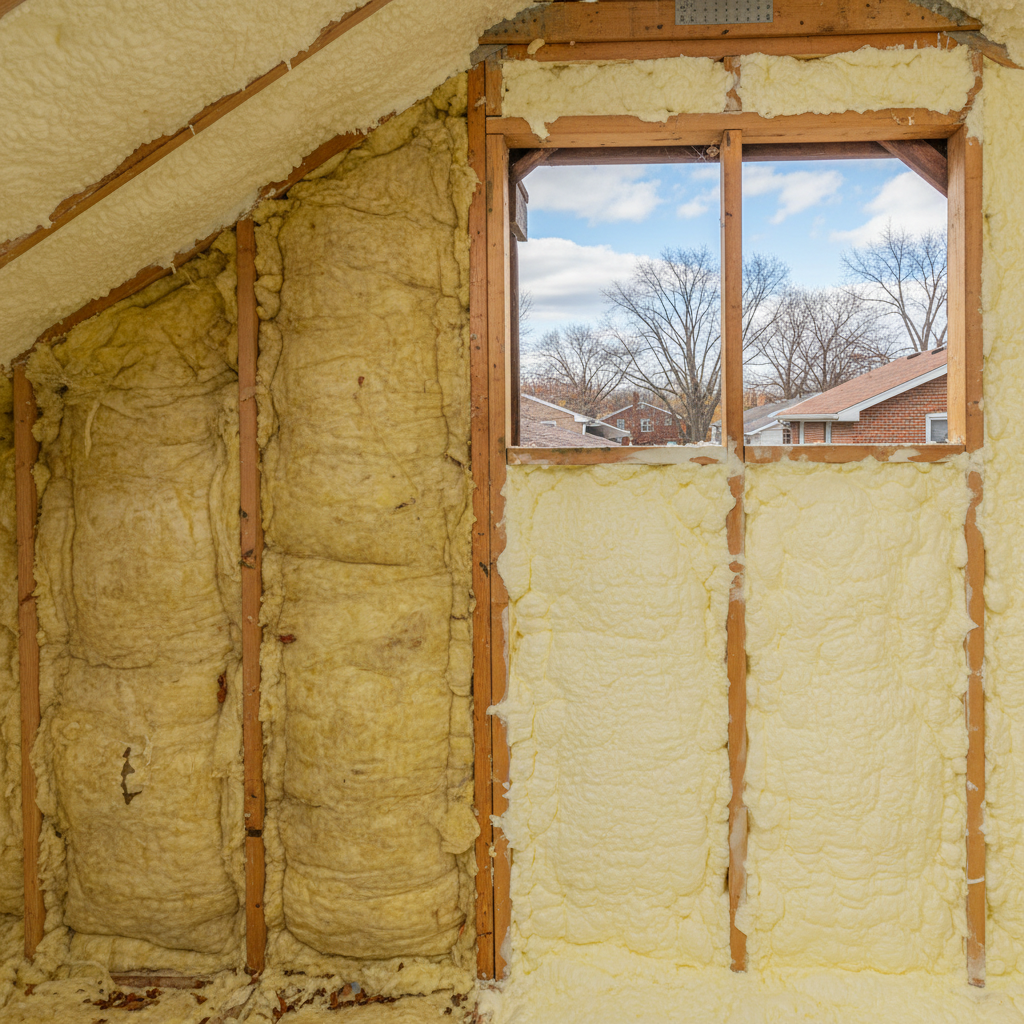
When we talk about open-cell spray foam, most people picture filling the entire wall or ceiling space with the stuff. That's what I call the 'full cavity' method. It's pretty thorough, and it's probably what comes to mind when you hear "spray foam insulation." But there's another approach that's been getting a lot of attention, especially for certain projects: 'flash and batt.' With this one, we spray a thinner layer of foam, usually just an inch or two, right onto the sheathing. Then, we fill the rest of the cavity with regular batt insulation, often fiberglass or mineral wool.
Cost: Where Your Money Goes
Let's be real, cost is usually the first thing everyone asks about. Full cavity open-cell foam nearly always costs more upfront. You're paying for more material, plus the specialized labor to get it applied just right. It's a top-tier product, and you're getting top-tier performance. Flash and batt, on the other hand, can be a lot friendlier to your wallet. You're using less spray foam—which is the priciest part—and making up the difference with cheaper batt insulation. For many Oak Park homeowners, especially if you're doing a big renovation or new construction where every dollar really counts, that cost difference can be pretty significant.
Performance & R-Value: What You Actually Get
Now, let's chat about how it performs. Full cavity open-cell foam, when installed correctly, creates an incredibly tight air seal. That's its big advantage. It expands to fill every little crack and crevice, stopping air leaks dead in their tracks. This is huge for saving energy, especially with our wild Chicago winters and those sticky, humid summers. You're generally looking at R-values somewhere around R-3.5 to R-3.7 per inch. So, a 2x6 wall (which is about 5.5 inches deep) could give you an R-value of R-19 or R-20, on top of that fantastic air seal.
Flash and batt works a little differently. That thin layer of foam still gives you a great air seal, which is super important. It also acts as a thermal break, stopping heat from sneaking through the studs. Then, the batt insulation adds its own R-value. The combined R-value can be quite good, often hitting or even exceeding what code requires. For example, a 1-inch flash of open-cell (R-3.7) plus 4.5 inches of R-15 fiberglass batt would give you an effective R-value of about R-18.7, with the added bonus of the foam's air seal. You won't get quite the same solid air barrier as full cavity, but it's a massive step up from just batt insulation alone.
Durability & Maintenance: Install It and Forget It?
Both methods are pretty tough once they're in. Open-cell foam itself doesn't settle or break down over time like some other insulation types do. It's a stable product. The main thing with flash and batt is making sure the batt insulation goes in properly after the foam. You really don't want any gaps or compression. Neither option really needs ongoing maintenance once it's installed. If you ever need to get to wiring or plumbing behind the foam, it's usually easier to cut and patch open-cell than closed-cell. And with flash and batt, you'd just pull out the batt and then deal with the foam.
Moisture Management: A Big Deal Here in Illinois
This is where I really pay close attention, especially for homes around here. Oak Park, just like the rest of Chicagoland, deals with a lot of humidity—both inside and out—and we get some pretty serious temperature swings, don't we? Open-cell foam is vapor-permeable, meaning it can let some moisture pass through it. This isn't necessarily a bad thing; it actually means if moisture *does* get into the wall cavity, it has a chance to dry out. However, you've got to be careful about exactly where and how you use it. For example, in an unvented attic assembly, full cavity open-cell is often the go-to choice because it pushes the dew point to the exterior of the foam, which helps prevent condensation problems on the roof deck.
With flash and batt, that thin foam layer still gives you a good air seal, but the batt insulation behind it doesn't offer the same kind of moisture control. If you have a lot of vapor pushing in from inside the house, or if there's a leak, traditional batt insulation can get wet and lose its R-value. That's why proper ventilation and really understanding your home's specific moisture situation are critical for both approaches, but especially for flash and batt in certain applications.
My Recommendation for Oak Park Homeowners
So, what's the final word for your Oak Park home? If your budget allows for it, and you're aiming for the absolute best performance in terms of air sealing and thermal efficiency—especially in an unvented attic or a full wall cavity where you want maximum R-value and moisture control—I'd definitely lean towards full cavity open-cell spray foam. It's a really solid solution that truly seals up your home's envelope.
However, if you're working with a tighter budget, or if you're insulating a space where the R-value requirements aren't quite as extreme, or maybe you're just looking for a big upgrade from old, leaky insulation, then flash and batt is a fantastic compromise. You get the crucial air sealing benefits of spray foam without the full cost, and you're still dramatically improving your home's comfort and energy performance compared to just batt insulation alone. It's a smart way to get a lot of bang for your buck, I think.
Ultimately, it all comes down to your specific project, your budget, and the areas you're insulating. We've done plenty of both at Sunrise Insulation Co., and we can walk you through the specifics for your place. Give us a call, and we'll figure out what makes the most sense for your home.